Practical Test
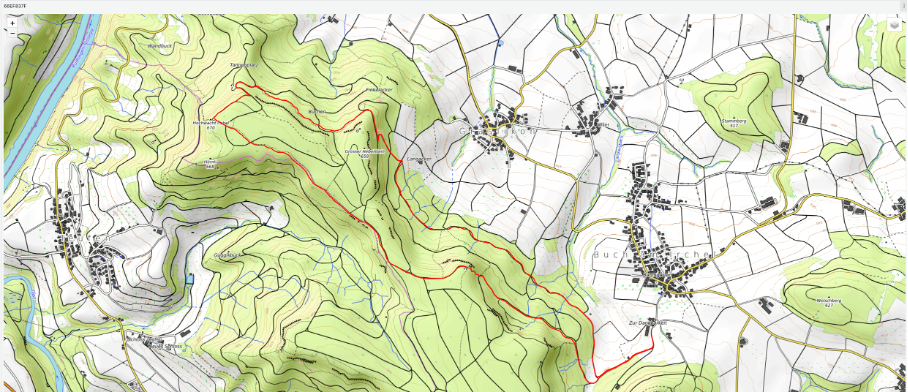
To test the accuracy of our TPS tracker under realistic conditions, we completed a jogging route of approximately 10 km.
Two devices were mounted simultaneously on the same upper arm to enable a direct comparison:
- Device A: without GPS correction data
- Device B: with GPS correction data
Additionally, it was tested how the system behaves during LTE interruptions and whether tracking data is reliably cached.
Device Setup
Both devices mounted on the right upper arm. Purpose: Comparison with and without correction data, as well as buffering test during LTE interruption.
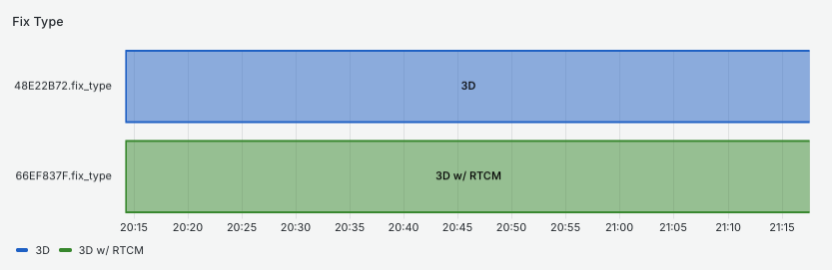
- 48E22B72 specifically targeted at Event ID 2006 → received no correction data
- 66EF837F on Event ID 1006 → with correction data
Analysis of the test data:
Test conditions
The route passed through several sections with difficult GPS conditions:
- Forest passages
- Slope positions
- partially depressions in the terrain
This restricted the view of the sky – at times, only a portion of the satellites was visible.
These conditions are typical for many sports events such as:
- Trail running
- Triathlon
- Mountain bike race
- cross-country skiing race
GPS Accuracy in Comparison
The difficult conditions were clearly reflected in the estimated horizontal accuracy.
This was often over 1 m, which is to be expected under such conditions.
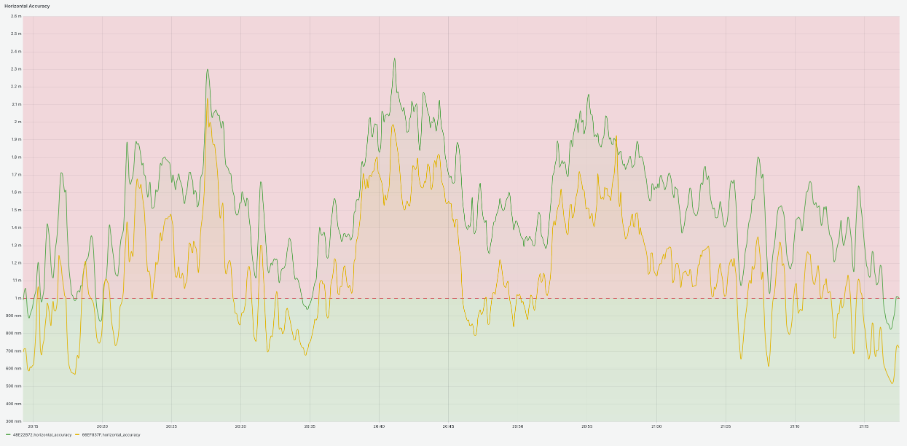
Nevertheless, a clear difference emerged:
- The device with correction data performed consistently better
- average accuracy of about 0.5 m
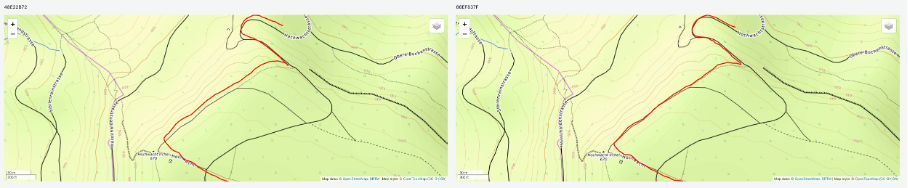
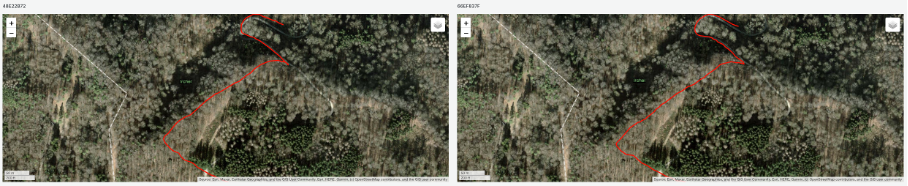
Example in the presentation:
right with correction data, left without.
LTE interruptions in testing
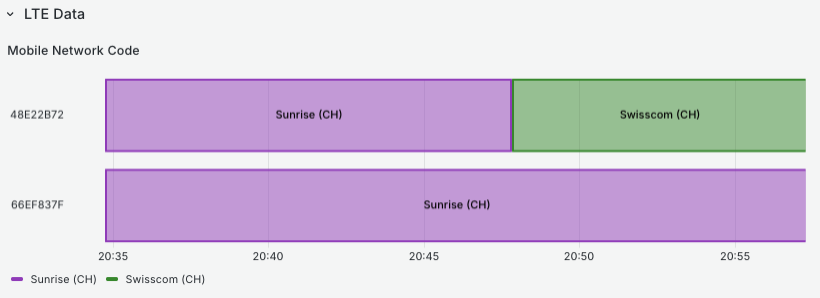
During the test route, there were mobile network interruptions, during which one device also switched providers.
Analysis of the LTE Events:
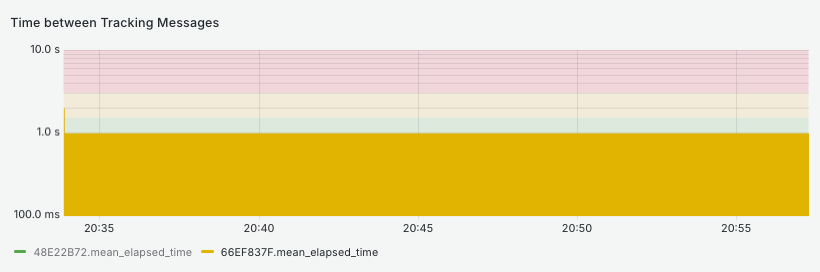
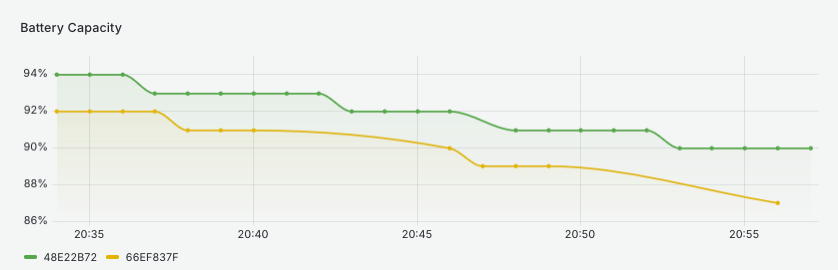
Despite these interruptions, the tracking data were:
- saved locally
- automatically transferred later
The result:
no gaps in tracking.
Why this is important
At many sports events, network issues regularly occur, e.g.:
- in Bergen
- in the forest
- in the tunnels
- at very large events
With the integrated buffering in the TPS tracker, no data is lost.
Synchronisation of devices
It is clearly visible in the speed diagram that both devices were mounted on the same upper arm.
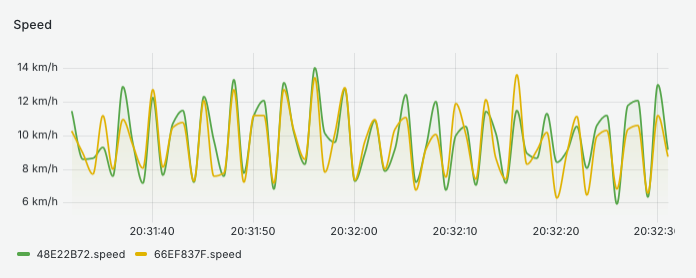
The speed fluctuations caused by the arm movement are synchronised in both devices, which confirms that both trackers recorded exactly the same movement.
Conclusion
The practical test clearly shows:
- GPS correction data significantly improve position accuracy
- even under difficult conditions in the forest, the accuracy is about 0.5 m
- LTE interruptions do not lead to data loss, as all data is stored locally
Thus, the TPS system meets important requirements for sports events:
- precise position data
- reliable live tracking
- stable data transmission even with poor network coverage