In the last few weeks, we have conducted extensive measurement series – including a direct comparison between the RACE RESULT ActivePro V3 transponder and our TPS device.
Test setup: eBike, RTK-GPS and reference systems
For reproducible measurements, we have set up a special device on an eBike and equipped it with a high-precision GPS system (measurements with RTK correction data, < 1 cm accuracy).
In addition, several measurement and reference systems were used:
- Loop (30 cm wide, loop thickness 60%) with RACERESULT Ubidium
- FinishLynx Vision Pro with GPS Extension, 3000 FPS
- ALGE-Light Barriers PR1aW
- ALGE Timy3 W (GPS-synchronised)
Thus, we were able to validate the results from different perspectives and verify the timing against reliable references.
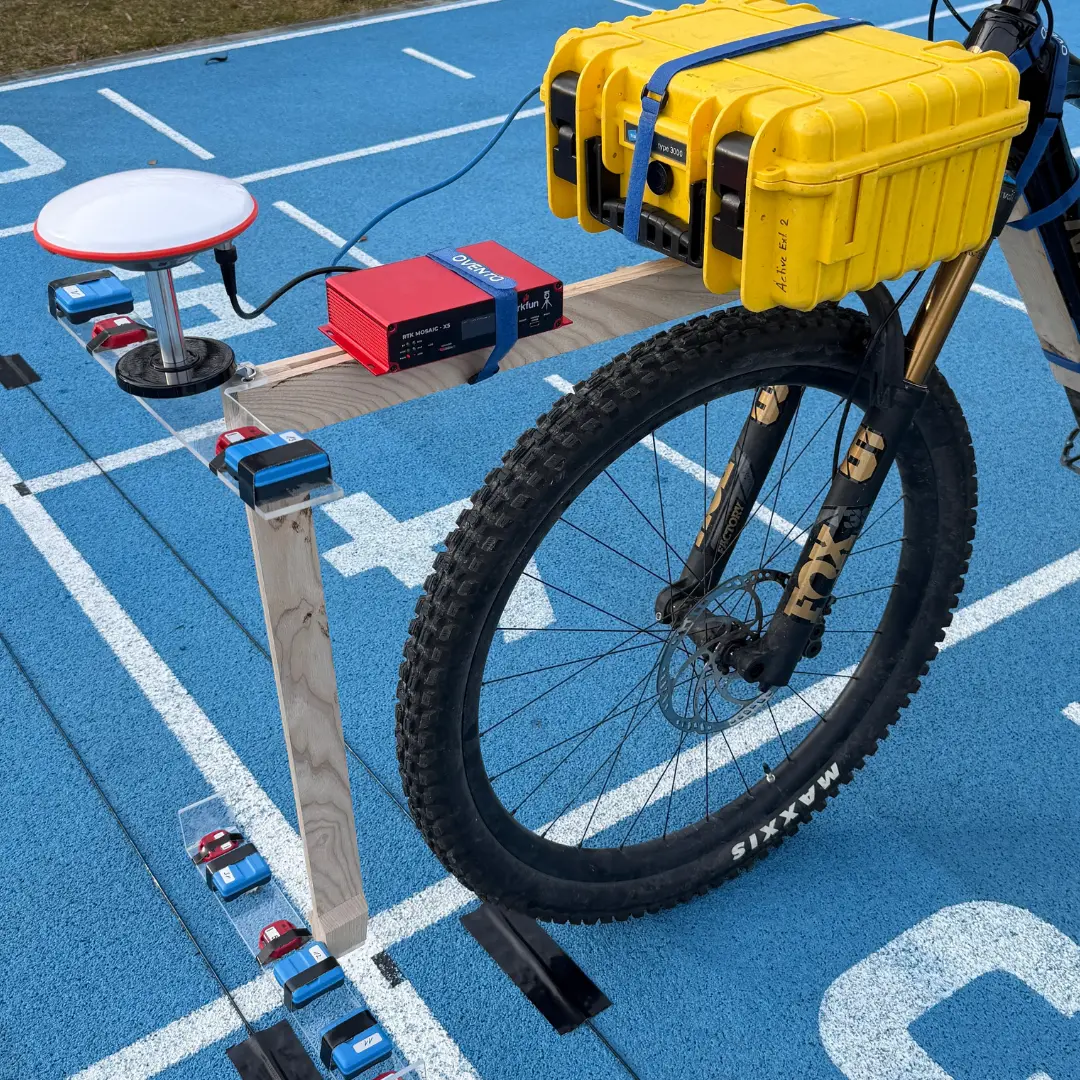
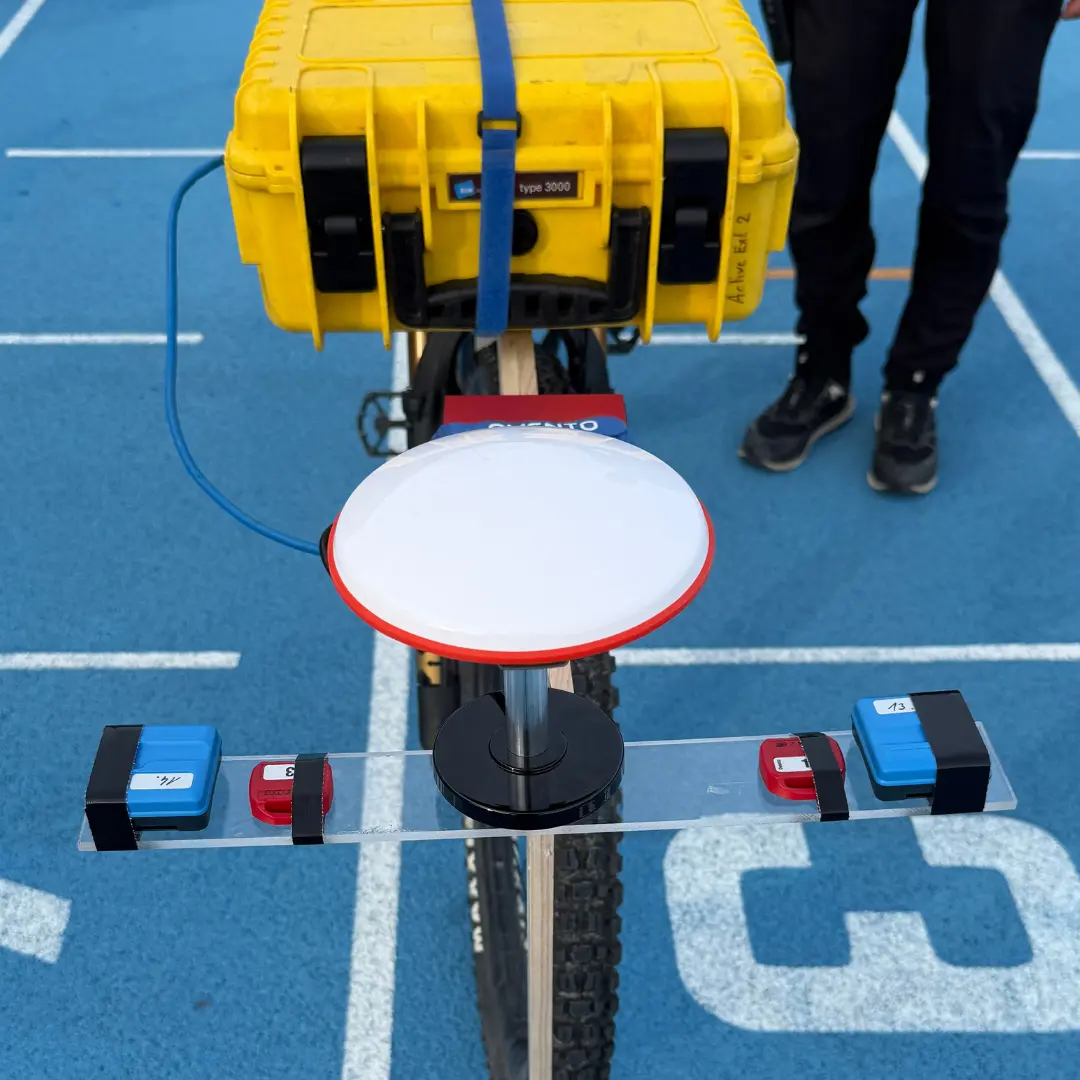
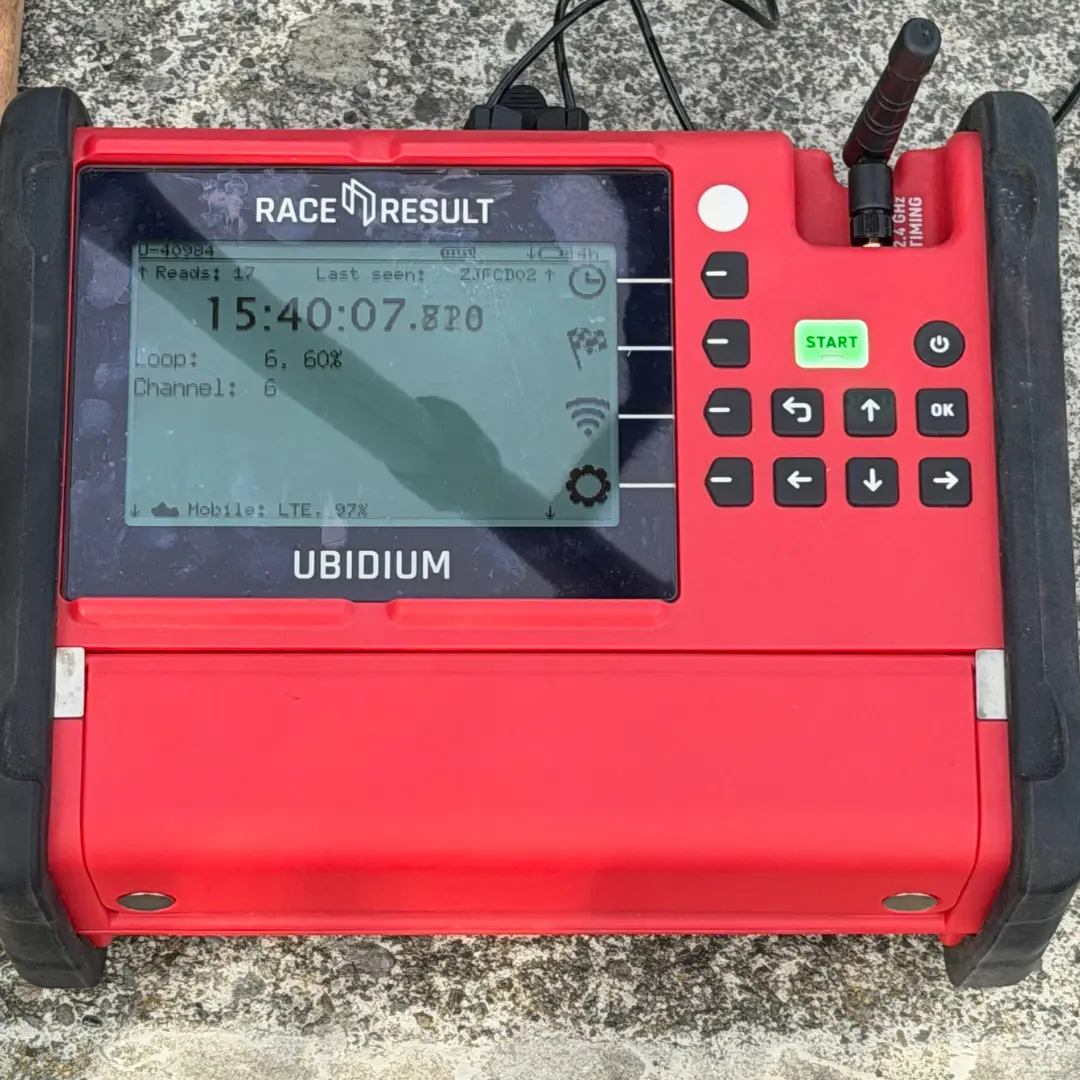
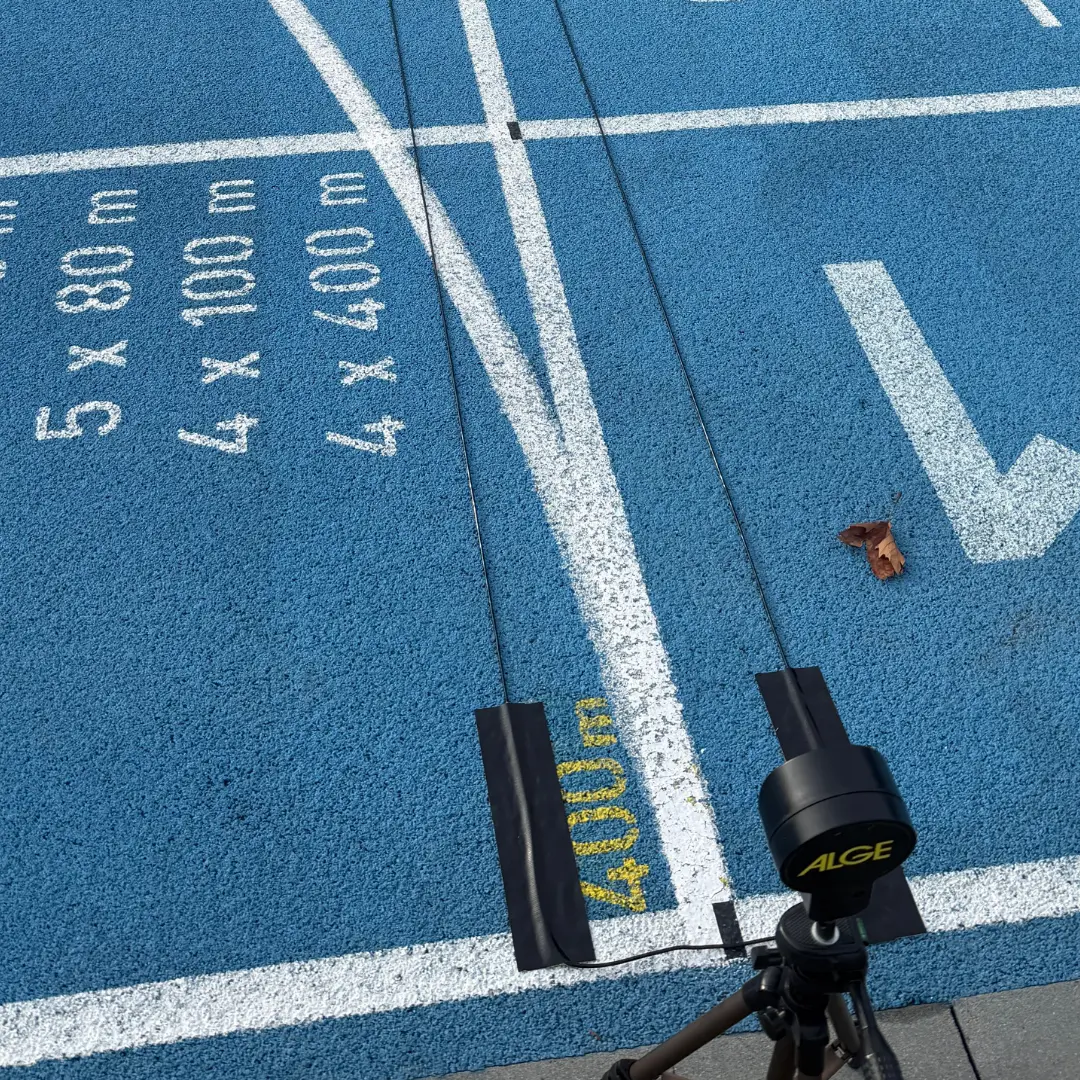
Results at 25 km/h (Devices 30 cm above ground)
Testing was conducted at 25 km/h with devices in a ground-level position.
In total, over 100 measurements were recorded over 26 rounds.
Measurement results
- Raceresult Active V3-Transponder:
Ø 5.7 ms deviation
Max. 36 ms - TPS-Device:
Ø 6.9 ms deviation
Max. 41 ms
These values are already very strong at the current stage of development – especially because we have not yet finalised the optimisation of the algorithm for our TPS device.
Classification of values (at 25 km/h)
For better classification:
25 km/h is approximately 6.94 m/s.
Thus mean:
- 5.7 ms ≈ 4.0 cm
- 6.9 ms ≈ 4.8 cm
This shows that both systems in the test operate within a very precise range.
Influence of installation height
An interesting result from the tests:
Both the RACE RESULT ActivePro V3 Transponder and the TPS device showed less accurate measurements when the devices were mounted slightly higher.
A possible cause is that the 30 cm loop used was somewhat too narrow for this geometry or the power was a bit too weak. We will specifically investigate this point in further tests.
Virtual Timing Line: surprisingly strong for intermediate times
Particularly exciting was the accuracy of our Virtual Timing Line, which we defined directly in the browser on the map.
Result of the Virtual Timing Line
- Average deviation: 96 ms
- Measurements: >100
From our perspective, this is already absolutely sufficient for most interim periods.
For context, at 25 km/h, 96 ms corresponds to approximately 0.67 m – a very good value for split times in many event setups, especially without a physical timing line and infrastructure on site.
Absolute positional accuracy of the TPS device
The absolute accuracy of the device, when it is located directly under the antenna, was on average below 0.5 m in the test (one measurement every second).
This is also a very good result and an important foundation for further features related to tracking, virtual lines, and event evaluation.
Conclusion and Outlook
The previous results confirm that we are on a very good path with our TPS system:
- very good tracking accuracy
- very good timing accuracy in direct comparison
- stable results over many measurements
- promising virtual timing line performance
- further optimisation potential in the algorithm already identified